
Working Together to Protect Owensboro’s Water Supply
Groundwater is the water that seeps into the ground and collects beneath the earth’s surface. Rain, melting snow, or surface water that becomes groundwater is stored in underground layers called aquifers and serves as the source of drinking water for thousands of homes and businesses.
An aquifer is any type of geologic material, such as sand or sandstone, which can supply water to wells or springs. When water seeps in from the surface and reaches this water table, it begins moving towards points where it can escape, such as wells, rivers, or lakes.
The groundwater, which supplies wells, often comes from within a short distance (a few miles) of the well. How fast groundwater moves depends on how much the well is pumped and what type of rock particles or bedrock it is moving through.
OMU operates more than 30 wells along the East 4th Street/State Route 144 corridor. These wells draw water from the Ohio River Alluvium Aquifer, providing safe, reliable drinking water to customers throughout the region. These wells are 100-150 feet deep and protected by a clay layer. The quality of the water coming from these wells is excellent!
What is Wellhead Protection?
Wellhead Protection is a way to prevent drinking water from being polluted by managing possible sources of contamination. By identifying potential risks and promoting responsible practices, we help ensure clean, safe water for generations to come.
Protecting our water is a community effort, and everyone has a role to play.
How do wells sometimes become polluted?
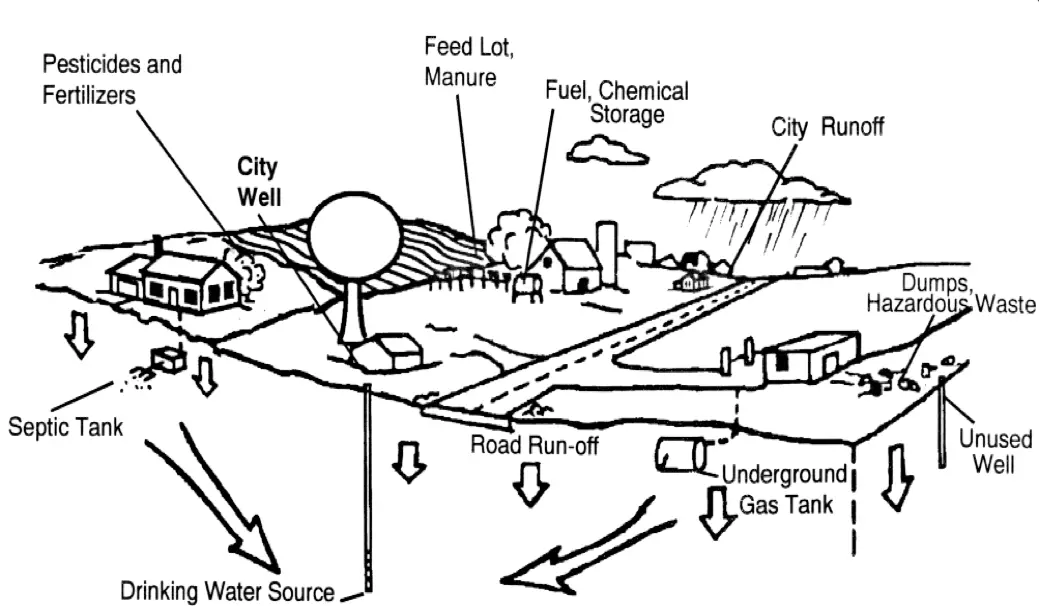
Wells become polluted when substances that are harmful to human health get into the groundwater. Water from these wells can be dangerous to drink when the level of pollution rises above health standards. Many of our everyday activities can cause pollution. Much can be done to prevent pollution, such as wise use of land and chemicals. The expense of treating polluted water or drilling new wells can also be avoided.
Help avoid drinking water contamination by being an environmentally aware citizen.
Wellhead protection will be an ongoing need for our community. Everyone has an important part to play in protecting drinking water wells – today and in the future!
How You Can Help
Simple actions make a big difference:
- Properly dispose of used motor oil, antifreeze, paint, and household chemicals.
- Use fertilizers, pesticides, and other hazardous products responsibly and always follow label instructions.
- Never pour chemicals into the ground or into storm drains.
- Inspect and maintain septic systems regularly. Avoid putting items as diapers, coffee grounds, or hazardous chemicals down toilets or drains.
- Properly seal abandoned wells on your property.
- Learn more about protecting groundwater and share this information with others.
Learn More
- OMU maintains a Wellhead Protection Plan and submits it to the Kentucky Department of Environmental Protection, in accordance with Kentucky regulations.
- The Kentucky Energy and Environment Cabinet, Division of Water can provide information on Kentucky’s Wellhead Protection Program and Groundwater Protection. Call the Division of Water at (502) 564-3410.
- The U.S. Environmental Protection Agency, Office of Groundwater and Drinking Water, can provide information and resources on groundwater and groundwater protection. Information is available at epa.gov/safewater.
- The Groundwater Foundation can provide motivational and inspirational education and community-based action programs that creatively involve individuals, communities, public and private entities in groundwater conversation and protection.
Wellhead Protection Area
This Wellhead Protection Area is located on the northeastern end of Owensboro, Kentucky. This area contains more than 30 drinking water wells that currently supply drinking water to Daviess, Hancock, Ohio, McLean and Henderson Counties.
Printable Flyer
We offer a print-friendly flyer so that you can share this information with family, friends, and neighbors to help keep our community’s drinking water safe.